Croatia
Radio is an important medium that is followed daily by a significant part of the population and is listened to on average for several hours a day in various situations.
What is digital radio?
DAB (Digital Audio Broadcasting) is a system for broadcasting high-quality digital audio programs and accompanying data services intended for reception through receivers similar to those in FM. The signal is transmitted and received “over the air”, that is, by antennas, just like an analog FM signal, but the difference is that the transmission and reception are not carried out in analog form but in digital form. However, given the wide range of services it provides, DAB+ is much more than a digitized audio program.
For new content and connected listeners
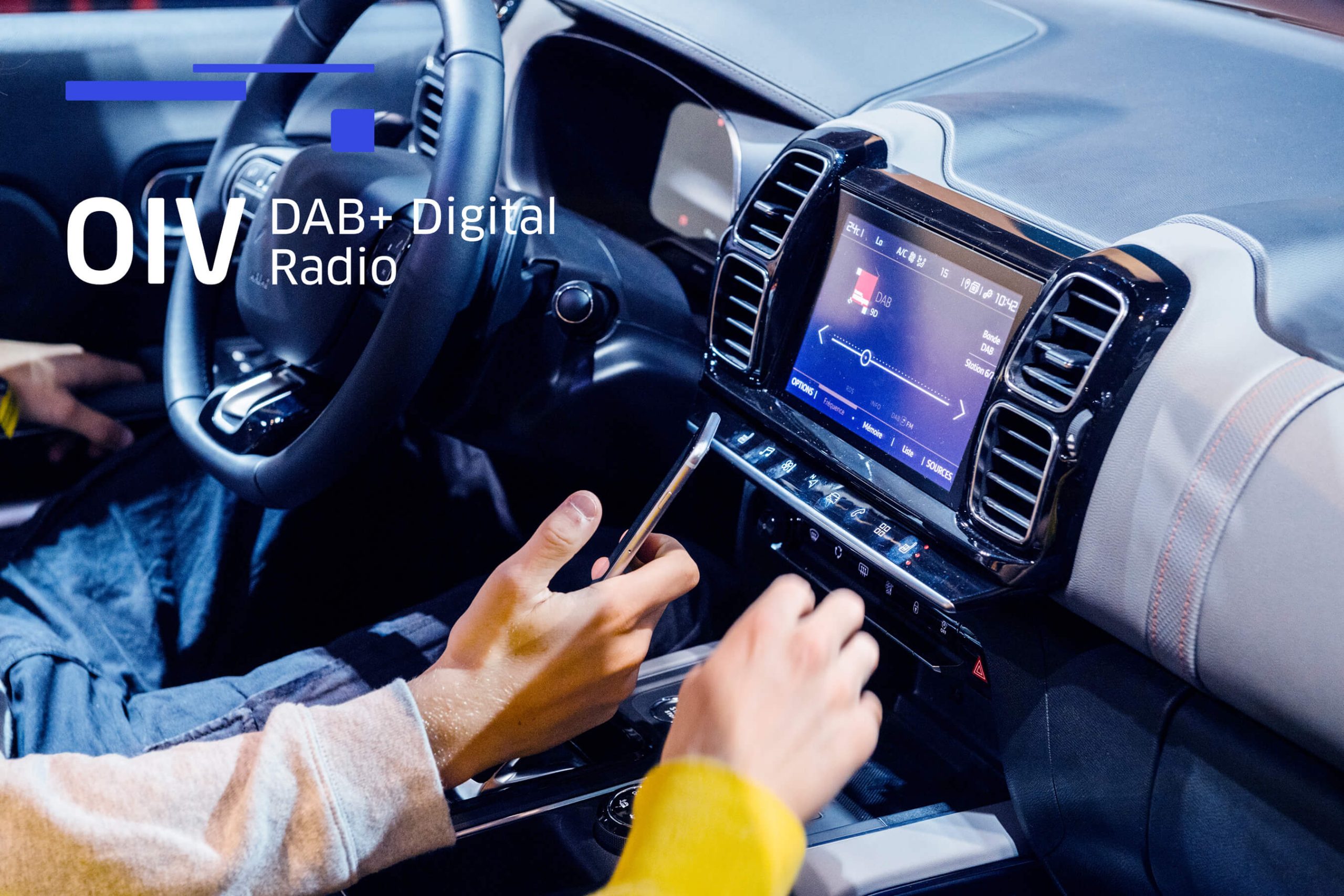
Through DAB+, listeners get radio signal reception without interference, the possibility of a larger and simpler choice of programs with clear sound and additional textual, graphic, and video data related to audio content such as album covers, song and artist information, electronic program guide, etc., and all without internet costs and completely free for users.
It should be noted that the FM spectrum at the national and regional level and in larger cities is full and there are no new frequencies available, and the biggest advantage of digital radio for both listeners and broadcasters is the ability to transmit and receive a greater number of programs. Accordingly, additional space is opened for new publishers, while the existing ones get the opportunity to produce new content. New broadcasters can thus reach listeners, and existing broadcasters can increase listenership in a wider coverage area than on the FM platform, and at the same time expand their portfolio.
Coverage of the Republic of Croatia
In the first year of test broadcasting, which began on November 20, 2017, it was broadcast from four transmitters, and in November 2022, the number of locations grew to as many as 26, so that more than 96% of the Croatian population is currently within reach of the DAB+ signal, while the highway coverage is 93%.
An important date for digital radio is also December 20, 2020, when the obligation prescribed by the European Code of Electronic Communications (EECC) entered into force, which stipulates the obligation that every radio receiver installed in a new vehicle for sale or rent on the EU market must contain a receiver capable of receiving and reproducing radio services provided by digital terrestrial radio broadcasting. Since then, all new cars must have a DAB+ receiver.
DAB+ as a green technology
It should also be noted that DAB+ technology is in line with the national development strategy for green and digital transition due to a significant reduction in electricity consumption and CO2 emissions.
Namely, the long-term goal of the European Union, and thus of Croatia, is to become “climate neutral” in less than 30 years. DAB+ is the solution that consumes the least energy for listening to the radio because it requires a smaller number of transmitters, and energy consumption does not increase with the increase in the number of listeners, as is the case with streaming. Significantly lower energy consumption is the most significant contribution to environmental protection, since reducing the emission of greenhouse gases, that is, reducing the carbon footprint, achieves a more sustainable, so-called “green broadcasting.” Likewise, research has shown that there is a significant reduction in non-ionizing EM radiation per transmitter location.